What Is the Difference Between AEO, GEO and Traditional SEO?

Core Differences Between Traditional Search, Answer Engines, and Generative AI
Traditional SEO, answer engine optimization (AEO), and generative engine optimization (GEO) describe different planning perspectives, but they are not completely separate technical systems. In Google Search, the same foundational SEO practices apply to classic results, AI Overviews, and AI Mode; the AI features can also present comprehensive responses with links to supporting websites.
Understanding the underlying technology behind each search model helps determine the appropriate optimization strategy for brand visibility across different platforms:
- Traditional Search (SEO): Focuses on making pages eligible, accessible, and useful in search. Relevant practices include permitting crawling, using internal links, and keeping important content available as text.
- Answer Engines (AEO): Frames content around answering a question clearly. It can guide editorial organization, but Google does not require special schema or separate machine-readable files for its AI features.
- Generative Engine Optimization (GEO): Focuses on how content may appear alongside generated responses. For Google AI Overviews and AI Mode, pages must be indexed and eligible to appear with a search snippet; meeting those conditions does not guarantee inclusion.
These categories overlap rather than dividing visibility into three isolated channels. Google states that its AI features surface relevant links and that existing SEO fundamentals remain worthwhile. AI Overviews provide a starting point for exploring a topic, while AI Mode supports nuanced questions, comparisons, and further exploration.
Comparison table
Comparing SEO, AEO, and GEO Across Key Technical and Content Metrics
Comparing AEO, GEO and traditional SEO is most useful when the labels clarify content goals without implying unsupported ranking formulas. For Google Search, the shared foundation includes technical eligibility, crawl access, internal discoverability, people-first content, a useful page experience, and structured data that matches the page’s visible text. No additional technical requirements apply specifically to AI Overviews or AI Mode. [Source: AI Features and Your Website]
Official guidelines note that fundamental SEO best practices remain foundational for appearing within features like Google AI Overviews, requiring no separate technical submissions for inclusion . However, optimizing for answer engines (AEO) and generative engines (GEO) introduces specialized technical and content metrics that sit alongside traditional performance indicators.
Measurement should reflect the platform being evaluated. Google reports appearances in AI Overviews and AI Mode within Search Console’s overall search traffic under the Performance report’s Web search type. Site owners may also use analytics tools to assess conversions and time spent on the site.
Optimizing Content for ChatGPT, Perplexity, Gemini, and Google AI Overviews
Platform-specific claims should be separated from documented Google guidance. Google says that standard SEO best practices remain relevant to AI Overviews and AI Mode, which surface relevant links and require no separate submission protocol, special AI text file, or dedicated schema markup. The models and techniques used by AI Overviews and AI Mode can differ, so their responses and supporting links may vary.
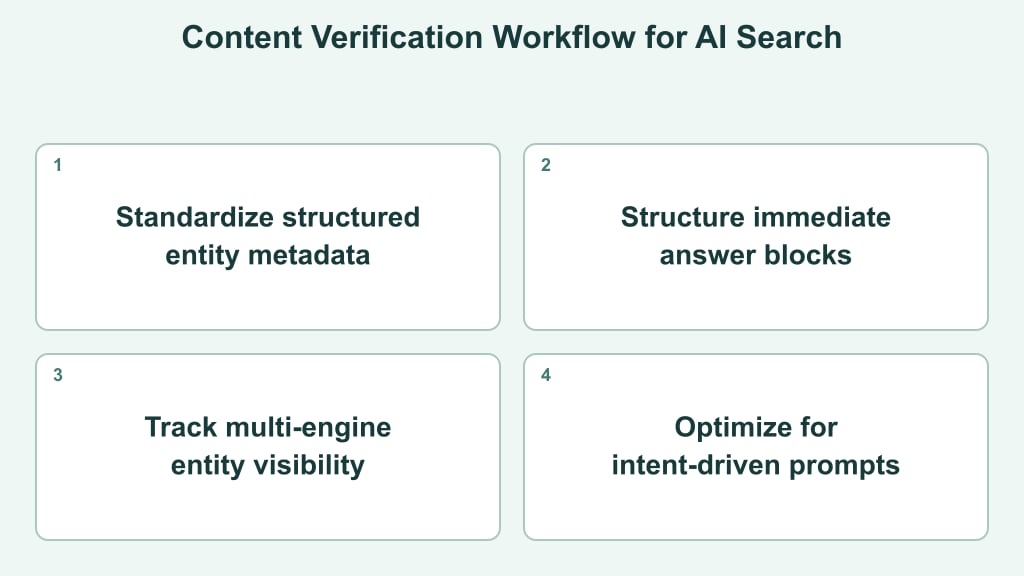
To prepare content across these environments, implement the following practical verification workflow:
- Use structured metadata accurately: Schema.org defines
Articleas a type for articles and provides properties includingarticleBodyfor the article’s text andarticleSectionfor its section or sections. Any structured data used should correspond to the visible page content. - Structure immediate answer blocks: Provide clear, single-paragraph definitions directly beneath subheadings to capture AEO direct-answer extraction targets.
- Track multi-engine entity visibility: Audit how brand attributes and key terms are cited across AI search outputs using specialized platforms like AEO Analytic to detect entity gaps.
- Optimize for intent-driven prompts: Address natural language questions and follow-up query structures to ensure GEO models synthesize your domain during multi-turn conversational searches.
Measuring Brand Mentions and Entity Visibility Across Search Platforms
Evaluating brand visibility across traditional search, answer engines, and generative engines requires shifting from single-keyword rank tracking to structured entity auditing and co-occurrence analysis. Because generative models assemble responses dynamically from diverse sources, tracking presence relies on verifying how accurately platforms recognize and cite your core attributes.
- Standardize prompt sampling: Build a fixed repository of category-specific, informational, and comparative prompts. Run these queries consistently across ChatGPT, Gemini, Perplexity, and Google AI Overviews to capture true mention frequency.
- Track entity co-occurrence and context: Measure how often your brand appears alongside target industry terms, core service attributes, and primary competitors rather than relying strictly on numerical position rankings.
- Audit third-party citation pathways: Identify which external media outlets, review portals, and industry directories answer engines reference when generating non-branded summaries about your market segment.
- Verify Knowledge Graph consistency: Inspect structured entity attributes in Wikidata, Google Knowledge Graph, and authoritative databases to ensure retrieval-augmented generation systems draw from verified, uncorrupted facts.
- Monitor cross-platform variance: Compare output performance between live web-retrieval engines and static model weights. Utilizing dedicated monitoring workflows via platforms like the provider helps teams spot missing citation sources and adjust entity markup accordingly.
Systematic brand tracking ensures that visibility strategy reflects actual machine synthesis patterns rather than outdated blue-link position metrics.